The rules of Petteia
Everything below is the game's own rules text, as it appears inside Petteia.
The pieces, in both sets
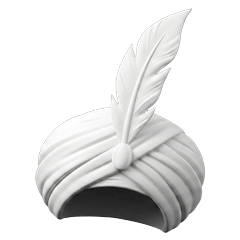
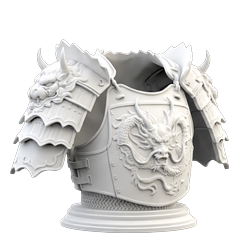
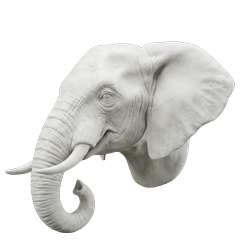
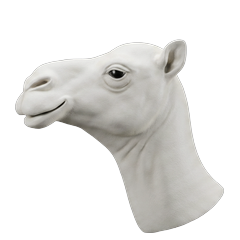
Petteia can be played with its own pieces or with familiar chess pieces. The rules are identical; only the artwork changes. The letters in brackets are the ones used when a game is written down.
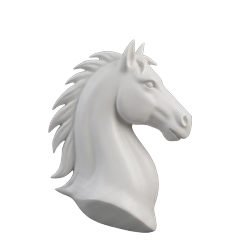
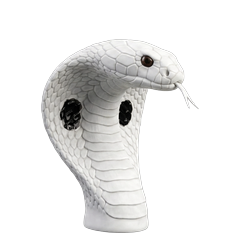
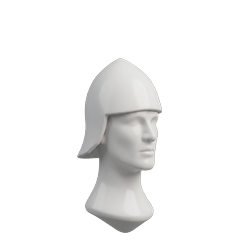
Play now in your browser · Step through a recorded game
Petteia — how it differs from chess
The Mother of Chess: an ancient and more intelligent parent of the modern game.
The board
Played on a 10×10 board (files a–j, ranks 0–9) instead of 8×8, with ten pieces and ten pawns per side.
The pieces
The Snake — a serpentine mover
The Snake slithers outward along eight winding paths that emerge in four pairs. Each pair leaves the Snake along the same first diagonal step, then the two paths split — one bending one way, the other the opposite way — each taking three diagonal steps in total to reach its end square. It always moves outward, never doubling back.
The Snake (centre) and the eight squares it can reach. Each coloured line traces the winding route the Snake follows to that square when nothing blocks its way.
Passing through: the Snake glides over the two squares its path bends through — it doesn't matter whose pieces sit there, friend or foe. It may instead stop early and capture an enemy sitting on one of those pass-through squares.
Landing & capturing: at the end square, an enemy piece is captured (the Snake takes its place), a friendly piece blocks that path (it can't land on its own men), and an empty square is simply where it lands.
The Sacrifice Move
Once per game — available from the very first move — your King may give up one of its own adjacent pieces and step onto that square, instead of making a normal move. The King is not the piece being sacrificed; it sacrifices a neighbour to reposition itself. Most often it's an escape hatch: a way to slip the King out of a check it couldn't otherwise survive. You can't use it if doing so would leave your own King in check.
How to play it: tap your King. If its Sacrifice is still available, the neighbouring pieces you may sacrifice light up — tap one to make the move. (Tapping any other square instead just moves or selects as normal.)
Winning
By checkmate, as in chess. Stalemate is a draw. (In timed games, running out of time on your move also loses.)
Writing a game down
Petteia games are recorded in coordinate notation: the piece's letter, the square it left, a dash for a quiet move or x for a capture, and the square it arrived on. A Sacrifice Move uses *, and a promotion adds = and the new piece's letter. For example Pe1-e3, Hc9xd7, Kf9*e9, Pe8-e9=M.
Letters: K King, M Minister, E Elephant, S Snake, C Camel, H Horse, P Pawn. Files run a–j and ranks 0–9.
The PGN Viewer reads games written this way and checks every move against these rules.